
- The medical record found to contain additions or interlineations that can challenge the veracity of witnesses.
- The Last Will & Testament found to contain an ink formulation not commercially available until years after the supposed preparation date can prove the fraudulence of the instrument.
- The diary maintained by a victim of sexual harassment may be proven authentic as a contemporaneous record of events through analysis of the ink.
The validity of documentary evidence is of paramount interest in many different types of litigation (and all of these situations are actual cases in which Federal Forensic Associates has provided examination, consultation and testimony).
With advances in technology, many documents that could not be analyzed five years ago are now possible sources of important information, such as the answers to questions relating to the method and time period of preparation. See Ink Analysis / Ink Dating (PDF). Some of the materials we examine are paper, ink, typewriter, computer printer, carbon paper, xerographic copies, and pencil. See Tools.
Dr. Lyter began his career as a forensic chemist for the Bureau of Alcohol, Tobacco and Firearms, National Laboratory Center in Rockville, Maryland. He has been an instructor at the FBI Academy, Federal Law Enforcement Training Center, Naval Investigative Service, Air Office of Special Investigation, U.S. Secret Service, and others.
He is court qualified in federal, state and military courts in over 33 states, U.S. Virgin Islands, Australia, Canada, Mexico, Malaysia and Singapore. See About.
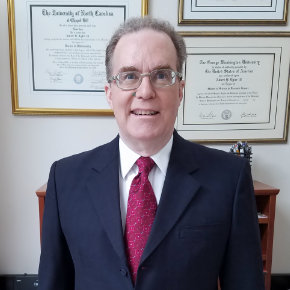
Albert H. Lyter, III, PhD
- Mormon will of the late Howard R. Hughes
- Slander trial of CBS, Sixty Minutes and Dan Rather
- Nazi war crimes case of Ivan Demjanjuk
- Sam Shephard murder trial — 2000
- Martha Stewart case
- Facebook case